From undergraduate to doctoral studies
Mainly composed of LESC research professors, the Departement of Anthropology at the University of Paris Nanterre offers an undergraduate track, the licence (Bachelor), spread out over three years, from L1 to L3, as well as four two-year master's degree specialisations. Interdisciplinary and open to the general field of human sciences, the undergraduate licence in "Sciences of Man, Anthropology, Ethnology" offers a progressive specialisation in ethnology, prehistory, ethnomusicology, and the anthropology of dance. The masters level offers four anthropology specialisations: "Anthropologie face aux enjeux contemporains" (AEC), "Anthropologie critique des patrimoines : Rituels, Arts, Musées" (ACPRAM), "Anthropologie musique, danse et son" (MADS), "Anthropologie des mondes pré- et protohistoriques" (AM2P). Masters students can continue onto doctorate degrees in various disciplines.

As a member of the Doctoral School "Spaces, Time, Cultures" (ED395) of University Nanterre, the LESC typically hosts about sixty doctoral candidates (consult the list of students here). Recent graduates of the doctoral school remain associated with the laboratory during the first five years following their thesis defence (consult the list of recent graduates here).

To enroll as a doctoral student in the laboratory, the candidate must first choose a laboratory member who is authorized to oversee research projects. It is also possible to write a thesis under the direction of two advisors from the laboratory, provided that one of them is authorized to diret student theses.

Laboratory thesis advisors

Members authorized to direct research (excluding emeritus professors)

  • PHILIPPE ERIKSON

    PHILIPPE ERIKSON
    Professeur des universités
    Bolivia, Brazil, French Guiana
    This email address is being protected from spambots. You need JavaScript enabled to view it.

  • FRÉDÉRIQUE FOGEL

    FRÉDÉRIQUE FOGEL
    Directrice de recherche
    France
    This email address is being protected from spambots. You need JavaScript enabled to view it.

  • ERIC GARINE

    ERIC GARINE
    Professeur des universités
    Cameroon
    This email address is being protected from spambots. You need JavaScript enabled to view it.

  • EMMANUEL GRIMAUD

    EMMANUEL GRIMAUD
    Directeur de recherche
    India
    This email address is being protected from spambots. You need JavaScript enabled to view it.

  • ANNE YVONNE GUILLOU

    ANNE YVONNE GUILLOU
    Directrice de recherche
    Cambodia
    This email address is being protected from spambots. You need JavaScript enabled to view it.

  • MONICA HEINTZ

    MONICA HEINTZ
    Professeur des universités
    France, Moldova, Romania
    This email address is being protected from spambots. You need JavaScript enabled to view it.

  • ALINE HÉMOND

    ALINE HÉMOND
    Professeur des universités
    Mexico
    This email address is being protected from spambots. You need JavaScript enabled to view it.

  • ADELINE HERROU

    ADELINE HERROU
    Directrice de recherche
    China
    This email address is being protected from spambots. You need JavaScript enabled to view it.

  • SOPHIE HOUDART

    SOPHIE HOUDART
    Directrice de recherche
    Japan, France
    This email address is being protected from spambots. You need JavaScript enabled to view it.

  • VANESSA MANCERON

    VANESSA MANCERON
    Directrice de recherche
    France, United Kingdom, Italy
    This email address is being protected from spambots. You need JavaScript enabled to view it.

  • ALBERT PIETTE

    ALBERT PIETTE
    Professeur des universités
    France
    This email address is being protected from spambots. You need JavaScript enabled to view it.

  • ISABELLE RIVOAL

    ISABELLE RIVOAL
    Directrice de recherche
    Israel, Lebanon
    This email address is being protected from spambots. You need JavaScript enabled to view it.

  • ANTHONY STAVRIANAKIS

    ANTHONY STAVRIANAKIS
    Chargé de recherche HDR
    United States, Switzerland
    This email address is being protected from spambots. You need JavaScript enabled to view it.

  • SABINE TREBINJAC

    SABINE TREBINJAC
    Directrice de recherche
    China
    This email address is being protected from spambots. You need JavaScript enabled to view it.

  • VALENTINA VAPNARSKY

    VALENTINA VAPNARSKY
    Directrice de recherche
    Guatemala, Mexico
    This email address is being protected from spambots. You need JavaScript enabled to view it.

  • FABIENNE WATEAU

    FABIENNE WATEAU
    Directrice de recherche
    Spain, Portugal
    This email address is being protected from spambots. You need JavaScript enabled to view it.

Atelier doctoral d'écriture

Soutenu par l'École doctorale ED395, cet atelier vient compléter l’offre de séminaires et ateliers qui sont proposés aux doctorant.es au sein du laboratoire (séminaires aréaux, d’équipes, ateliers type « Lectures » ou « Chantiers », atelier professionnel etc.) en reprenant la tradition d’un atelier, à leur destination exclusive, de travail collectif sur leurs propres travaux. En aucun cas il n’est question de suppléer à l’encadrement de la thèse par les directeurs et directrices et les CSI. Il s’agit plutôt d’offrir un cadre informel de réflexion paritaire, de formation par la pratique.

Plus d'informations

Contact : This email address is being protected from spambots. You need JavaScript enabled to view it. et les This email address is being protected from spambots. You need JavaScript enabled to view it.

Atelier des doctorant.es en ethnologie (Lesc)

Cet atelier, organisé par les doctorant.es eux-mêmes accompagnés par un.e chercheur.e ou un.e enseignant.e-chercheur.e, aborde différents aspects de la recherche spécifiques du contexte des études doctorales, ainsi que diverses facettes de la pratique professionnelle en anthropologie.

Plus d'informations

Contact : les This email address is being protected from spambots. You need JavaScript enabled to view it.

Theses defended in the laboratory

Continue reading

Centre for Research in Ethnomusicology

Presentation

The CREM is dedicated to the study of musical practices and knowledge as processes of sociocultural differentiation and as universal forms of human expression. This approach, based on a collection of musical data as well as ethnographic investigation, subscribes to an anthropology of music which acknowledges and incorporates its sociocultural, aesthetic, formal, acoustic, kinetic, and cognitive dimensions.

The centre furthermore studies new and under-researched subjects of the discipline, such as dance and choreography, the cultural and cognitive construction of emotion, and representations of sounds. Individual researchers and research groups develop themes and regularly present them in seminars held by the laboratory.

The CREM manages a vast library collection (with both books and music archives) of great patrimonial value that is consulted by an international audience.

The researchers hold responsibilities in teaching ethnomusicology at University Paris 8 St. Denis and University Paris Nanterre. The Ministry of Culture makes a vital contribution to the diffusion and development of CREM’s research, mainly through the use of multimedia technologies.

Lesc-Crem members

  • Lesc-Crem permanent researchers

    Chercheurs et enseignants chercheurs du CREM

    Sauf mention contraire, les enseignants-chercheurs sont de l'université Paris Nanterre et les chercheurs du CNRS

    Laboratoire d’ethnologie et de sociologie comparative has 13 registered members
     
    Professeur des universités
    émérite
    Bolivie, Brésil, Guyane française, France, Nouvelle-Calédonie
     
    Coord. éditoriale, Cité de la musique
    Bosnie-Herzégovine, Croatie, Italie
     
    Maître de conférences
    Bénin, Côte d'Ivoire, Mali, Cuba
     
    Directeur de recherche
    émérite
    Ouzbékistan, Tadjikistan, Iran, Pakistan, Azerbaïdjan
     
    Inspecteur, ministère de la Culture
    Brésil, Paraguay
     
    Chargée de recherche
    Inde
     
    Chargée de recherche
    Trinité-et-Tobago
     
    Maître de conférences, Paris 8
    Tchad, Burkina Faso, Niger
     
    Maître de conférences, Paris 8
    honoraire
    Bolivie, Chili
     
    Maître de conférences
    Ethiopie
     
    Maître de conférences
    Inde
     
    Maître de conférences
    émérite
    Maroc
     
    Chargé de recherche
    France, Roumanie
  • Lesc-Crem technicians and engineers

    Ingénieurs et techniciens du CREM

    Laboratoire d’ethnologie et de sociologie comparative has 1 registered member
     
    Chargée du traitement des données scientifiques
  • Lesc-Crem doctoral students

    Doctorants du CREM

    Laboratoire d’ethnologie et de sociologie comparative has 7 registered members
     
    Thèse intitulée « A Cotacachi sans y être. Pratiques musicales et dansées des communautés d'Imantag (Equateur) »
    Effectuée sous la direction de Jean-Michel Beaudet
     
    Thèse intitulée « Coexistences et plasticités dans les pratiques dansées au Maroc »
    Effectuée sous la direction de Jean-Michel Beaudet
     
    Thèse intitulée « Paredões : les murs de haut-parleurs itinérants dans la composition d'un son contemporain du Brésil »
    Effectuée sous la direction de Jean-Michel Beaudet
     
    Thèse intitulée « Manifestations et performativité : la résistance par le rire ? »
    Effectuée sous la direction de Jean-Michel Beaudet et Virginie Milliot
     
    Thèse intitulée « Faire musique, faire situation. À propos d'un musiquer libertaire (2016-2026) »
    Effectuée sous la direction de Jean-Michel Beaudet
     
    Thèse intitulée « Musiques et danses chez les Garinagu du Guatemala : environnements sonores, circulations et histoire »
    Effectuée sous la direction de Makis Solomos et Jean-Michel Beaudet
     
    Thèse intitulée « « Faire parler » l’invisible dans l’ombwiri. Une polyphonie de vocalités. Libreville, Gabon »
    Effectuée sous la direction de Grégory Delaplace et Katell Morand
  • Lesc-Crem postdoctoral fellows and temporary lecturers

    Post-doctorants et ATER du CREM

    Laboratoire d’ethnologie et de sociologie comparative has 0 registered members
    No users in this list
  • Lesc-Crem recent doctoral graduates

    Docteurs du CREM

    Laboratoire d’ethnologie et de sociologie comparative has 7 registered members
     
    Thèse intitulée « La musique andalouse marocaine entre passé, présent et futur : mémoire, nostalgie et construction d'une identité nationale »
    Effectuée sous la direction de Jean Lambert
    Soutenue le 26/09/2022
     
    Thèse intitulée « Nagô é Lento! (Nagô, c’est lent !) Force, identités et dynamique musico-rituelle dans le xangô de Recife (religion afro-brésilienne) »
    Effectuée sous la direction de Jean-Michel Beaudet
    Soutenue le 16/12/2024
     
    Thèse intitulée « Sculpter sa place dans la fête. Techniques des corps et jeux d'intentions dans les pratiques musicales et dansées de l'île de Chios (Grèce) »
    Effectuée sous la direction de Michèle Baussant et Victor Stoichita
    Soutenue le 09/10/2024
     
    Thèse intitulée « « Danses culturelles » et politiques de la culture dans le Kenya contemporain. Les cas de Isukuti et de Gonda (régions de l’ouest et de la côte) »
    Effectuée sous la direction de Anne-Marie Peatrik et Jean-Michel Beaudet
    Soutenue le 22/01/2021
     
    Thèse intitulée « Les voix de l'exil. À l'écoute des expériences musicales dans la diaspora tibétaine de la "Petite Lhasa" (Dharamsala, Inde) »
    Effectuée sous la direction de Anne de Sales et Christine Guillebaud
    Soutenue le 09/01/2025
     
    Thèse intitulée « Bouddhisme, corps et machines – les sound systems de Phetchabun, Thaïlande (2016-2019) »
    Effectuée sous la direction de Sabine Trebinjac et Dana Rappoport
    Soutenue le 22/06/2021
     
    Thèse intitulée « Tule & sound systems. Musiques en mouvement chez les Teko de l'Oyapock (Guyane) »
    Effectuée sous la direction de Jean-Michel Beaudet
    Soutenue le 15/12/2021
  • Lesc-Crem associate research fellows

CNRS – Musée de l’Homme Sound Archives

The CNRS – Musée de l’Homme Sound Archives gathers both published and unpublished recordings of music and oral traditions from around the world, from 1900 to today. Incorporating various mediums (cylinders, 78 rpm discs, vinyl discs, magnetic bands, cassette tapes, digital mediums), this collection is one of the most significant in Europe in terms of quality, quantity, and diversity.

CRISTAL collective: Team dedicated to the l'équipe CNRS — Musée de l'Homme (MNHN) Sound Archives won, in 2018, the award given annually by the CNRS to a team of engineers and technicians for their innovative collective project.

Projects

Crem seminar

The CREM (Centre for Research in Ethnomusicology) seminar takes place on two Mondays per month, from 10:00 to 12:00. Members of the CREM (doctoral students included) and invited researchers present their ongoing work. The presentations last 50 minutes, and are followed by a coffee break and discussion hour.
Occasionally, the seminar takes the form of a workshop which brings together several researchers around a common theme. In these cases, the seminar takes place over an afternoon, or sometimes an entire day.
Participation in the seminar is open to everyone. It is also integrated into the Master’s degree in ethnomusicology at the Universities of Paris Nanterre and Paris Saint-Denis.

> More information

Events

Publications

Links

Continue reading

Research data, archives, and library services

Éric-de-Dampierre Library

Bibliothèque Éric-de-Dampierre

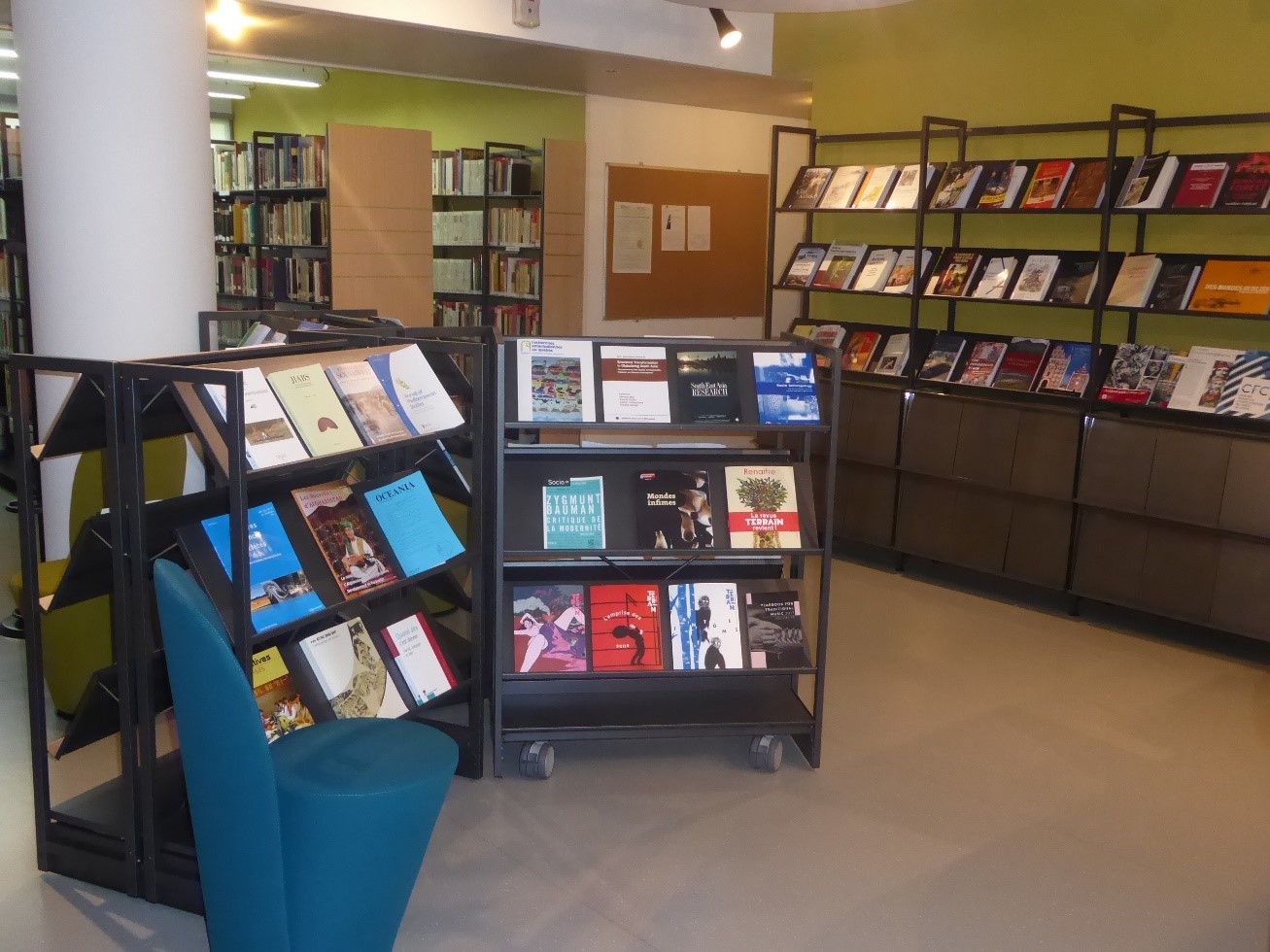
Created in 1967 by Éric de Dampierre, the library houses valuable and original collections of works and periodicals reflecting the labroatory's comparative and transcultural research orientation. The library is endowed with a general collection of around 61,000 documents, as well as some thirty libraries of researchers or associations deposited over the years.

The library preserves and allows access to more than 40 scientific archive collections, mainly produced by ethnologists since 1930 (https://www.archivesethnologues.fr/). In gathering these archive documents and publications together in a single location, the library enables a unique approach to ethnology and its history.

The libraries of the Centre de recherche en ethnomusicologie (Crem) and the Centre d'Enseignement et de recherche en ethnologie amérindienne (Erea) were integrated into the Éric-de-Dampierre library in 2019.

Access the general catalogue

The library's collections are also listed on Université Paris Nanterre portal: http://primo-prod.parisnanterre.fr.

Reception conditions

The library receives, in order of priority, researchers, research professors, doctoral students, and masters students of the Department of Anthropology (université Paris Nanterre). Authorization for temporary access can be granted to individuals wishing to consult the special collections. Opening days and hours are indicated on the homepage of the catalogue.

For all details, especially regarding opening hours during university vacations, you can reach us at 01 46 29 26 18 or send us a message at: This email address is being protected from spambots. You need JavaScript enabled to view it..

Lending materials

Borrowing materials is reserved for laboratory researchers, Ethnology Department research professors, and doctoral and masters students in ethnology at University of Paris Nanterre. It is possible to borrow up to five works less than thirty-years old for a duration of 21 days.

Access

The Éric-de-Dampierre Library is located on the garden level of the MSH Mondes (René-Ginouvès building) on University of Paris Nanterre's campus.


CNRS – Musée de l’Homme sound archives

(managed by CREM)

A century of history

The establishment of CNRS - Musée de l'Homme's sound archives is the outcome of a long history of scientifc research on music. The birth of ethnomusicology, then called "comparative musicology" coincided with the invention of the first recording devices at the end of the 19th century. Since then, the recording of musical documents, as well as their classification and their analysis, have occupied a central position in our knowledge of the Musical Person.

The preservation of sound archives began in 1932 with André Schaeffner's opening of the Phonothèque at the Trocadero Museum of Ethnography (which would become the Phonothèque of the Musée de l’Homme in 1937). On the initiative of Gilbert Rouget, a "Laboratory of Sound Analysis" was created in 1967, as well as a CNRS research team the next year. In 1985, CNRS and the Musée National d'Histoire Naturelle decided to combine their efforts to preserve these vast collections, christened since then the "CNRS - Musée de l'Homme Sound Archives". Tightly linked to research, the archives are bolstered and fueled by researchers' field missions on all the continents. These data collections enable laboratory research projects, diachronic and synchronic comparisons, the preparation of new fields, and teaching to university students. A small part of these archives has been published, in 78 rpm-discs (notably by Africa Vox), 33 rpm discs, and CDs (Chant du Monde, Harmonia Mundi). Currently, the digitization of analogue mediums continues thanks to the support of the Ministry of Culture and Communication and the National Library of France. The Center for Research in Ethnomusicology, located at the University of Paris Nanterre since 2009 as part of the Laboratory of Ethnology and Comparative Sociology, brings this unique heritage into the digital age, thanks to its innovative web platform, as well as into a long-term preservation (TGIR Huma-Num).

The database

  • More than 56,000 unpublished documents, of which 48,000 are digitised, representing nearly 6,000 hours of unpublished field recordings.
  • More than 19,000 published recordings, of which more than 7,000 are digitised, representing more than 3,000 hours (including more than 5,700 discs, many of which are extremely rare).
  • More than 200 countries are represented across more than 1,200 ethnic or social groups, creating a large variety of musical and sung expressions of different languages and dialects.

Catalogue organization

The catalogue is structured around 4 descriptive levels: Fonds, Corpus, Collection, and Items. The main descriptive level is that of the Collection. Each collection gathers a coherent group of audio files (Items) corresponding most often to recordings collected during the same research mission, or to a published disc. Certain collections are themselves grouped into a Corpus and into Fonds associated with particular collectors.

The number of recordings uploaded onto the platform is constantly increasing. Descriptions are entered in a collaborative effort between the platform's users: researchers, students, and archivists. The CREM welcomes all collaborations that aim to enrich and enhance this valuable heritage. Write us if you wish to contribute.

CREM uses the collaborative platform Telemeta in order to make the archives accessible to the scientific community, and, when possible, to the public, while still respecting interpreters' and collectors' legal and ethical rights. Developed with the support of the CNRS and the Ministère de la Culture et de la Communication, this tool allows researchers to enrich and exchange data online with the music-producing communities in their countries of origin, particularly by means of tools such as time markers, comment sections, etc. Navigation is faciliated by various options for the graphical display of sound.

Practical information

CREM manages the platform, and more than half of the digital recordings are freely accessible online. The site welcomes all collaborations aiming to enrich and enhance this valuable musical heritage common to all of humanity. Presently, in addition to 32,000 open-access recording, more than 24,500 restricted-access recordings are consultable with an access code, and on site at the CREM (University of Paris Nanterre, building Max Weber (W), room 112), as well as at the Eric-de-Dampierre Library, the Quai Branly Museum's mediatech, and the library at the Musée National d’Histoire Naturelle.

GeoEthno Thesaurus

GeoEthno is a geographical thesaurus designed for the geographic indexation of documents in the domain of anthropology. It is a library tool enabling the establishment of standardized lists of keywords that can be used to index and search the Éric-de-Dampierre Library's bibliographic database (the catalogue), and more largely in other library-members of the "Ethnology Network". 

Access the GeoEthno index 

Objectives and thesaurus coverage

The GeoEthno thesaurus indexes geographic names with their different variants, and chooses among them a "Preferred Term" or "Descriptor" which, if applicable, will be used as a keyword to geographically characterize a document. Next, this keyword will be applied to the database query, and all documents indexed with it will appear as a search result. The keywords will also more easily identify documents which do not necessarily respond to the search, namely by highlighting parts of the content. 

As a result, the thesaurus, which focuses on document retrieval, differs from terminology or toponymic databases, and GIS (Geographic Information Systems). 

Warning: The GeoEthno thesaurus does not include integrated mapping. Furthermore, because it is a developing and evolving tool, its geographic coverage is neither regular nor exhaustive. Updates are applied regularly. The thesaurus covers global geographic areas and does not specialize in a particular region. Its coverage is mainly focused on the informative needs of the ethnology library.  


Members

  • NICOLAS BONTEMPS

    NICOLAS BONTEMPS
    Responsable des archives filmiques et webmaster
    This email address is being protected from spambots. You need JavaScript enabled to view it.
  • FRÉDÉRIC DUBOIS

    FRÉDÉRIC DUBOIS
    Responsable de la bibliothèque et des fonds d’archives
    This email address is being protected from spambots. You need JavaScript enabled to view it.

  • ISABELLE DONZE

    ISABELLE DONZE
    Chargée des systèmes d’information
    This email address is being protected from spambots. You need JavaScript enabled to view it.

  • HÉLÈNE GAUTIER

    HÉLÈNE GAUTIER
    Chargée d’édition de corpus numériques
    This email address is being protected from spambots. You need JavaScript enabled to view it.

  • ESTHER MAGNIÈRE

    ESTHER MAGNIÈRE
    Chargée du traitement des données scientifiques
    This email address is being protected from spambots. You need JavaScript enabled to view it.

  • ANNA MARIO

    ANNA MARIO
    Assistante de ressources documentaires et scientifiques
    This email address is being protected from spambots. You need JavaScript enabled to view it.

  • MARIE-HÉLÈNE RIBAILLY

    MARIE-HÉLÈNE RIBAILLY
    Technicienne d'information documentaire
    This email address is being protected from spambots. You need JavaScript enabled to view it.

Projects

Publications

Continue reading

lesc-erea

Centre for Teaching and Research in Amerindian Ethnology

Presentation

The EREA centre (Enseignement et recherche en ethnologie amérindienne), originally founded as an autonomous CNRS research unit in 1986, brings together specialists in indigenous societies stretching from the lowlands of South America, particularly of the Amazon, to the Andes and Mesoamerica.

Through collaborative projects, the Centre explores comparative and theoretical perspectives on various themes, using ethnography as its principal research method. Often employing interdisciplinary approaches, research projects touch upon diverse sub-fields, including linguistic and cognitive anthropology, political anthropology, visual anthropology, and even ethnohistory. Certain projects explore more fields still, such as archaeology (Germ).

With their field work, EREA centre members aim to expand upon the knowledge of general issues affecting indigenous societies, but also to shed light on their contemporary transformations. They are involved with the communities they study and local institutions (through publications, teaching, reconstruction of knowledge, etc).

The centre holds a regular seminar and co-organises the Americanist Anthropology Seminar. Its members participate in teaching and supervising research in several institutions in France (University of Paris Nanterre, Inalco, EHESS, Quai Branly Museum) and overseas, where the EREA has created strong partnerships with numerous institutions in Argentina, Brazil, Columbia, Ecuador, Mexico, and Peru, as well as in the United States and Europe.

The EREA centre, over the years, has built an international network of associate researchers, and regularly welcomes foreign colleagues and doctoral students. It is a partner of international organisations (ANR, GDRI, Pics) and is involved in the organisation of many national and international symposia. Since its creation, EREA's members have also been very active in the Society of Americanists.

Lesc-Erea members

Projects

Seminars

Events

Publications

Continue reading

Cookies user preferences
We use cookies to ensure you to get the best experience on our website. If you decline the use of cookies, this website may not function as expected.
Accept all
Decline all
Flexicontent
Flexicontent
Accept
Decline
Save